AGLT: Collaborating to Protect Georgia’s Wild Future
AGLT: Collaborating to Protect Georgia’s Wild Future
Written by: Paxton Caroline Hayes
Photos taken by: Paxton Caroline Hayes
What is AGLT?
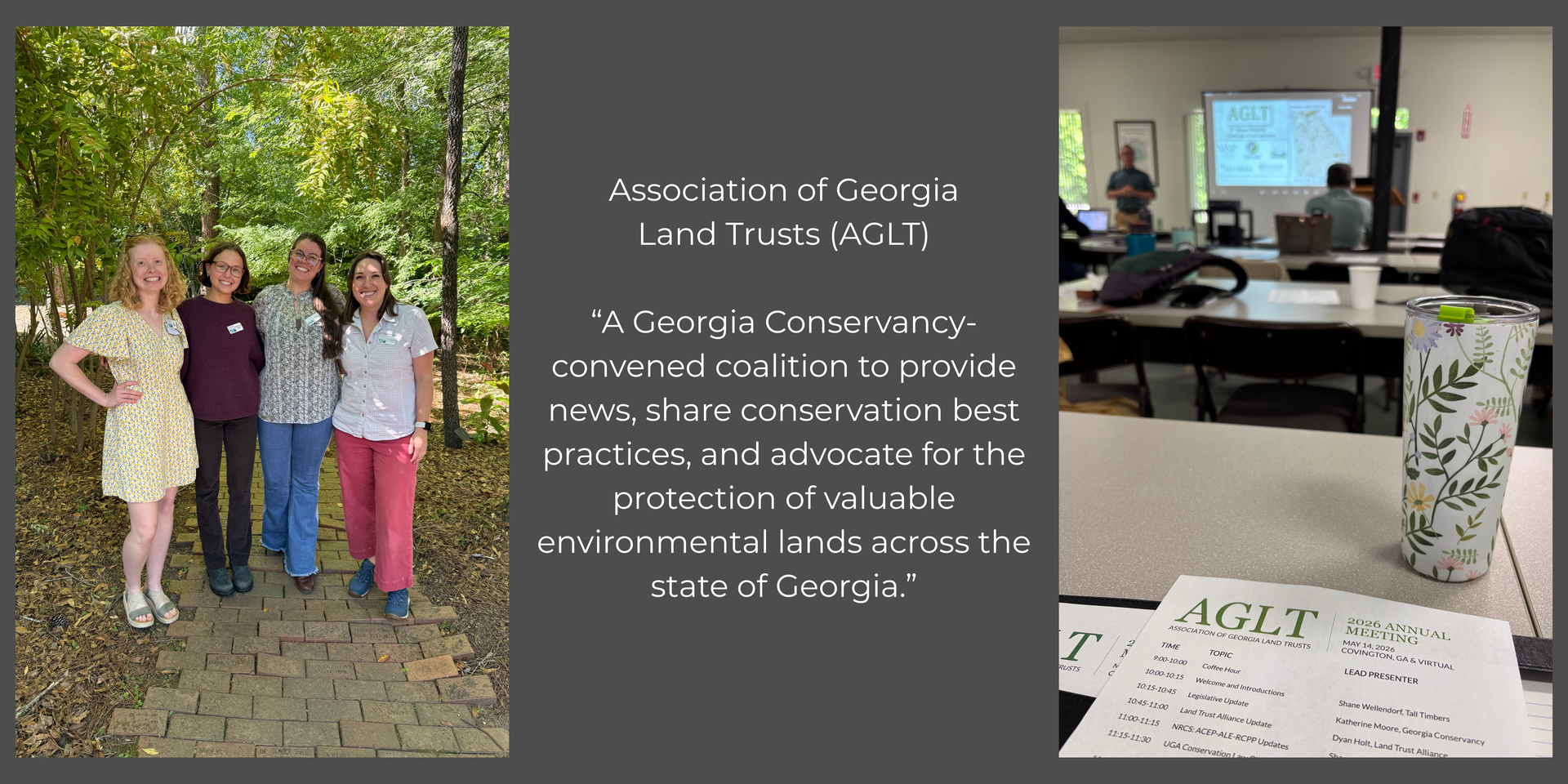
From local HOAs to multi-country alliances, professional working groups and associations allow us to connect with other people who share a common interest or purpose. Aptly named, the Association of Georgia Land Trusts (AGLT) is the statewide coalition for land trusts and other conservation groups that work within Georgia. This May, the Southern Conservation Trust was excited to attend the 8th annual AGLT meeting, highlighting the collaboration, advocacy, and conservation planning happening across the state.
AGLT brings together more than three dozen environmentally-focused organizations that work to preserve and protect the wildlife habitats, forests, wetlands, farmland, scenic landscapes, and water resources. Modeled after other successful collaborations in other southeastern states, such as
Florida and
North
Carolina, AGLT builds upon the earlier conservation networks of long-standing conservation advocate Hans Neuhauser. Through regular meetings, newsletters, and ever-growing partnerships, AGLT helps member organizations share best practices, technical expertise, and policy updates while coordinating statewide conservation efforts.
At this point in my post, you may be asking yourself: if AGLT is a coalition for land trust and conservation professionals, why am I telling you about it? A founding goal of AGLT is to strengthen private land conservation in Georgia, where more than
90% of
the state’s land is privately owned. By supporting initiatives involving conservation easements, habitat restoration, farmland preservation, and land stewardship, AGLT supports you - the private landowner.
The 2026 HIghlights
Every spring, SCT staff trades a day in the field for a day of collaboration at AGLT, most recently hosted at the Georgia Wildlife Federation office in Covington, GA. The day is packed with ideas and inspiration, from strategic mapping exercises and innovative tools to conversations about Georgia’s changing land use trends. Our favorite part is catching up with familiar faces and meeting new partners who share the same passion for protecting Georgia’s lands and natural resources. We always leave this conference feeling energized, connected, and excited for the work ahead!
With more than seventy professionals in the room (in-person and online), we discussed the significance of decisions from the 2026 Georgia Legislative sessions with
Georgia
Conservancy. We received news and updates from other state partners, such as
the Land Trust Alliance,
Tall Timbers, the UGA
Conservation Law Clinic,
NRCS,
Georgia DNR,
U.S. Forest Service, and others.
With The Conservation Fund, we used case studies of successful land conservation projects (the Dugdown Mountain Corridor and the Okefenokee Swamp) to discuss what we learned from these multi-year efforts. Through a mapping exercise inspired by the State Wildlife Action Plan (SWAP) and led by Georgia Conservancy, we mapped where we work, where we hope to see more land conserved, and where the greatest threats to Georgia’s wild lands exist. This was a great opportunity to coordinate potential conservation projects with partners around the state.
Significantly, we heard from the Association County Commissioners of Georgia and the Southern Environmental Law Center about the rapid growth of data centers across Georgia and the implications these projects may have on land use, water resources, energy demand, and conservation priorities. As communities across the state face emerging development decisions, land trusts and conservation organizations are actively working with local leaders, planners, and partners to identify balanced, long-term solutions that protect both economic opportunity and Georgia’s natural resources.
These conversations reinforced an important reminder: conservation is most effective when communities stay informed and engaged. Whether through supporting local conservation efforts, participating in planning discussions, or advocating for responsible growth, everyone has a role to play in protecting the landscapes and resources that define our region.
Want to help protect the landscapes and natural resources that define our region? Become a member of the Southern Conservation Trust and support local land conservation, environmental education, and stewardship efforts across Georgia.
Learn more and become a member today at
www.sctlandtrust.org/memberships.
Press & Media Inquiries
Contact Us
About Southern Conservation Trust
At Southern Conservation Trust, we are passionate about elevating nature through exceptional stewardship. Based in Georgia, our 501(c)(3) public charity has successfully conserved over 65,000 acres of land across the Southeast, including five public nature areas in Fayette County and the Fayette Environmental Education Center. We believe that protecting our natural spaces is just the beginning; everyone should have equal access to enjoy the beauty of the outdoors. Join us in our mission to foster a deeper connection between people and nature. Learn more at www.sctlandtrust.org.
Share Post
Recent Articles & Blogs