
Exploring the Wonders of Limestone in Edmondson County, Kentucky
Exploring the Wonders of Limestone in Edmondson County, Kentucky
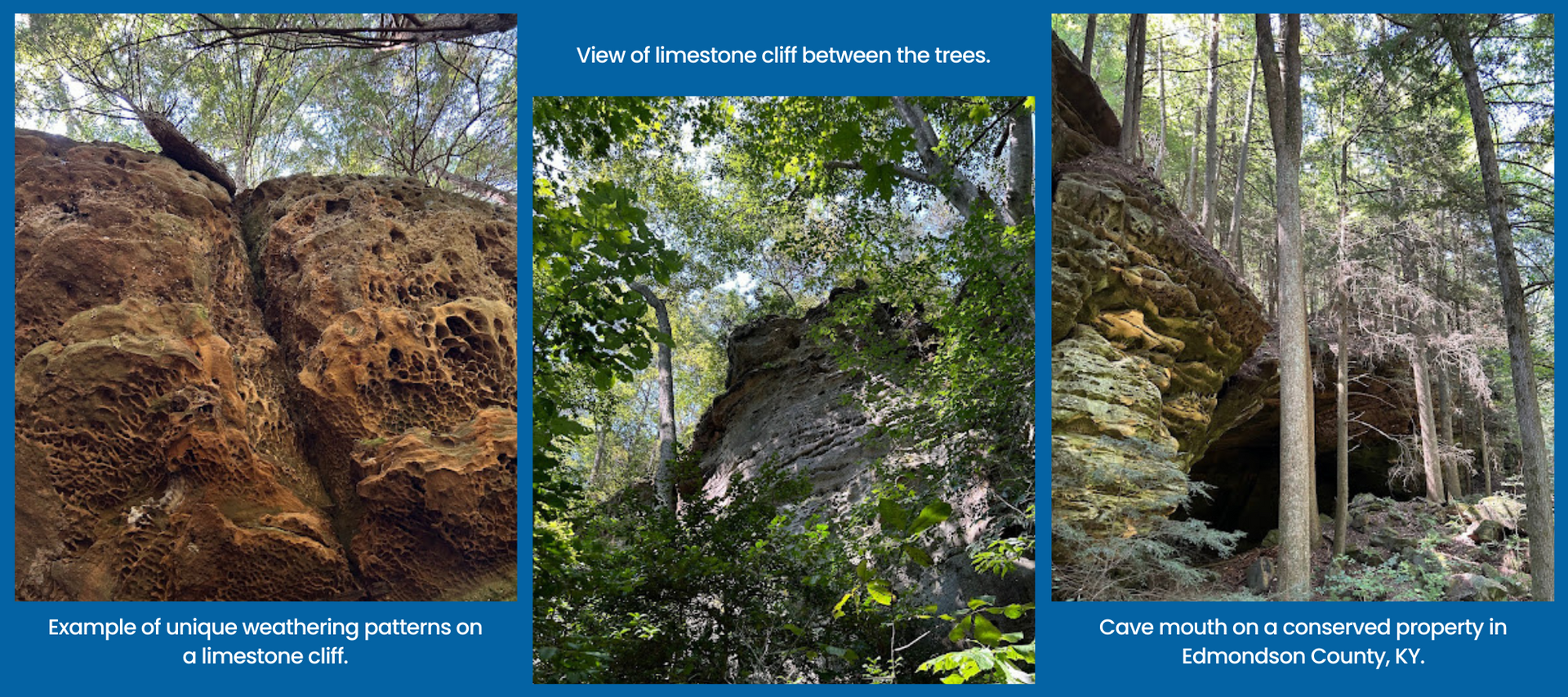
Limestone cliffs and caves are some of nature’s most fascinating geological features. SCT holds the conservation easement for a property in Edmondson County, Kentucky, an area known for its limestone formations and expansive cave systems.
What is Limestone?
Limestone is a type of sedimentary rock that forms over millions of years from the accumulation of organic materials, including fossils. This rock is often made up of calcium carbonate and the remains of ancient organisms, such as Brachiopods—marine creatures that went extinct millions of years ago. The fossils found in limestone offer a window into the distant past, providing valuable insight into ancient ecosystems and marine life.
The Formation of Limestone Cliffs and Caves
Limestone cliffs are the result of natural erosional processes between water and calcium carbonate. Rainwater and groundwater are slightly acidic and dissolve the calcium carbonate that makes up the limestone, slowly eroding the rock and creating deep, intricate formations. The process of water chemically dissolving limestone is called karstification. The erosional power of water physically weathers the rock, carving out caves, fissures, and sinkholes, which can eventually become vast underground networks of chambers and tunnels.
Limestone Caves: Nature’s Hidden Beauty
Limestone caves are home to diverse ecosystems. Many species of bats, insects, and other wildlife rely on caves, making them vital habitats in the region. The caves also play a crucial role in regulating the local groundwater system, acting as natural filtration systems that clean and replenish water supplies.
Limestone caves and cliffs are not only important from a geological and ecological perspective but also have significant cultural value. They provide opportunities for education, research, and outdoor recreation, making them an invaluable resource for the local community and beyond.
By preserving these natural landscapes, we ensure that future generations can experience the wonder of these geological formations while also safeguarding the unique ecological benefits they provide.
Written By: Rita Neuzil
Sources:
Press & Media Inquiries
Contact Us
About Southern Conservation Trust
At Southern Conservation Trust, we are passionate about elevating nature through exceptional stewardship. Based in Georgia, our 501(c)(3) public charity has successfully conserved over 65,000 acres of land across the Southeast, including five public nature areas in Fayette County and the Fayette Environmental Education Center. We believe that protecting our natural spaces is just the beginning; everyone should have equal access to enjoy the beauty of the outdoors. Join us in our mission to foster a deeper connection between people and nature. Learn more at www.sctlandtrust.org.
Share Post
Recent Articles & Blogs